Childhood Apraxia of Speech
Difficulty coordinating muscle movements for consistent sound production and clear articulation.

Program
Enhances expressive language and articulation skills with a tailored and engaging approach.
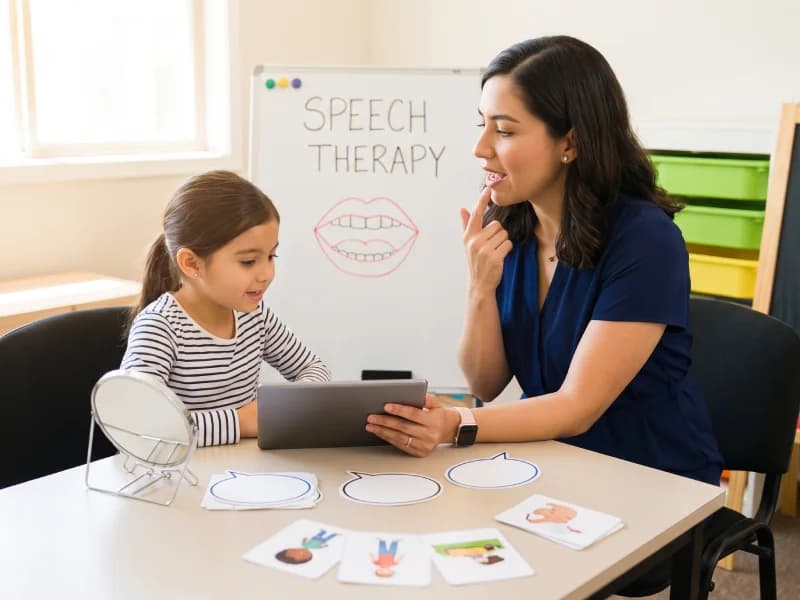
How we help
Common areas of focus — always tailored after assessment and a conversation with your family.
Difficulty pronouncing sounds correctly, like substituting “w” for “r” or omitting sounds in words.
Issues producing speech sounds clearly, affecting overall intelligibility.
Struggles with forming sentences, using vocabulary, or understanding spoken or written language.
Disruptions in speech flow, including repetitions or prolonged pauses.
Problems with pitch, volume, or quality of voice, such as hoarseness or breathiness.
Our approach
Difficulty coordinating muscle movements for consistent sound production and clear articulation.
Slurred or slow speech caused by muscle weakness, often linked to neurological conditions.
Challenges speaking, understanding, reading, or writing due to neurological injury.
Speech therapy supports social communication, cognitive-communication skills, auditory processing for hearing impairments, and safe swallowing strategies where clinically indicated. Sessions are play-based, family-informed, and paced to each child’s strengths.
Other programs
Take the first step with a conversation — we’ll guide you from there.